Saltwater Gospel is the most exhilarating mess I’ve sat through in years, and I mean that as a fact, not a complaint.
The score is extraordinary. Beckett Wright’s gospel-inflected music — thirteen numbers that move like a Sunday morning building toward revival — is the kind of writing that makes you wonder where this composer has been hiding. The orchestra under music director Mireille Osei opens Act One with a chorale prelude that doesn’t just establish the 1930s New Orleans setting; it tells you the entire emotional architecture of the show in three minutes. When it swells again under the Act Two closer, the Harrington Theatre practically vibrated. I watched a man in the second row grip his program with both hands, like he was afraid of what he was feeling. That is what good musical writing does.
But then there’s the book.
Playwright Avery Holt has given us a story with the bones of something great — Sister Mae Tatum, a Black evangelist who built a congregation in the Tremé district out of sheer force of will and a voice that could peel paint, forced to reckon with the man who knew her before she was anyone. The dramatic engine is there. The characters are there. What’s missing is structural clarity, particularly in the first act, where Holt seems reluctant to let the stakes land. Scenes end before they should. Confrontations dissolve into songs that, gorgeous as they are, keep diffusing tension at the exact moments the show needs to build it.
Pero — and this matters — the cast is carrying heavy freight with their bare hands.
Davina Rousseau, playing Sister Mae, delivers the finest musical theater performance I’ve seen this calendar year. She does something that is genuinely rare: she makes the technique invisible. When she opens her mouth in “The Ground Beneath Me,” the second-act eleven o’clock number, you don’t hear a trained voice executing a difficult song. You hear a woman being broken open. The run up to her final note doesn’t land as a technical achievement; it lands as an emotional truth. The entire house went silent in a way that audiences only go silent when they’ve stopped thinking about what they’re watching and started feeling it. Rousseau has been building toward a role like this for fifteen years. She arrived.
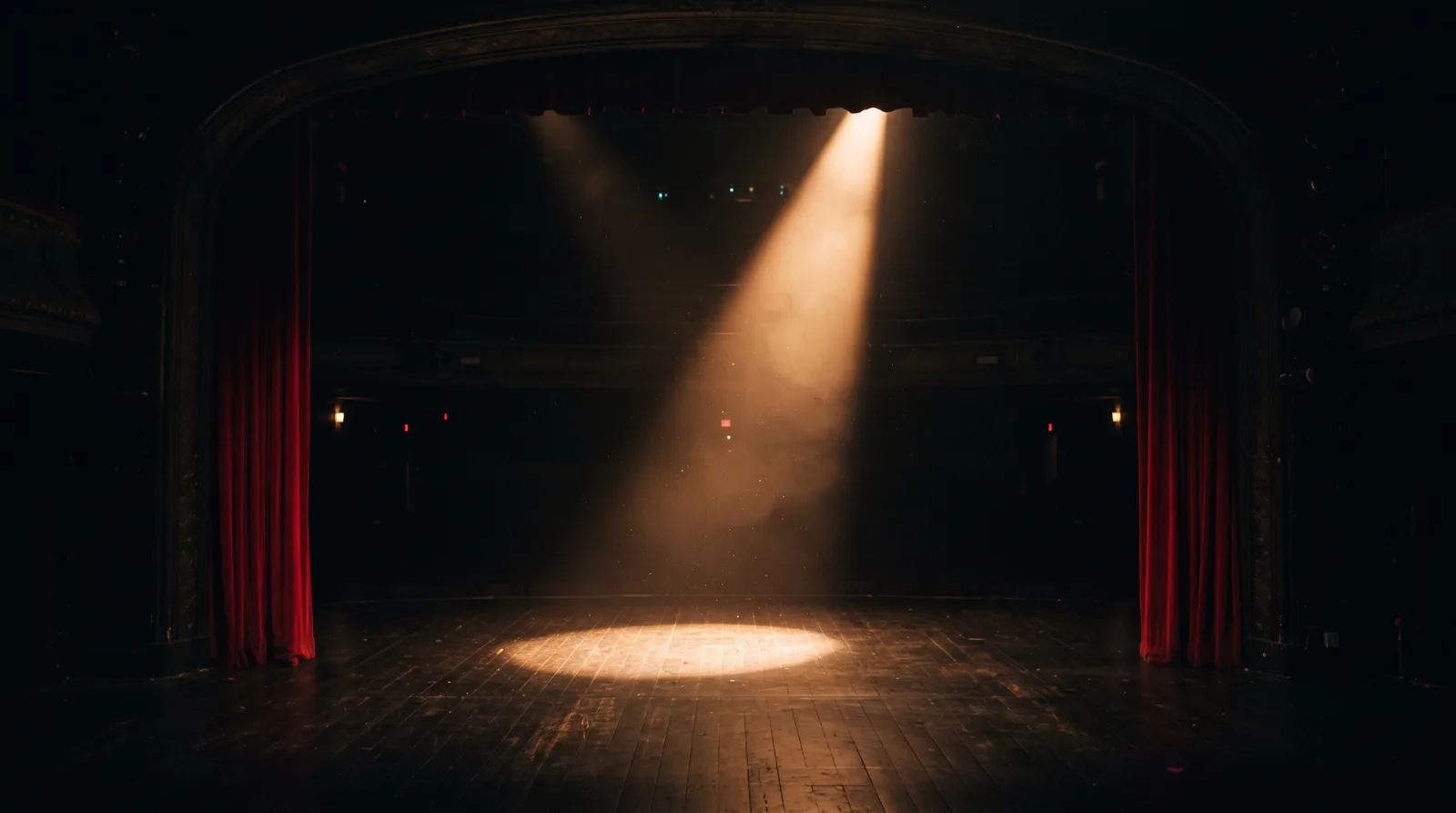
The set design by Lena Marchetti is doing real work. The sanctuary she’s built at center stage — rows of mismatched pews, a stained-glass window that catches the light differently at every hour of the story — shifts across the show from a place of safety to something oppressive without a single piece of furniture moving. It’s accomplished design, and director Olu Abara knows how to use it, staging the confrontations in the aisles, in the margins, never behind the pulpit — so the pulpit itself remains uncontested until the moment it needs to be taken.
Marcus Ellery, as Caleb, the man from Sister Mae’s past, is the weak link in an otherwise strong cast. He’s a technically proficient performer who hasn’t found the character’s need yet. His big Act One number, “River Remembers,” lands with competence when it should land with menace. Ellery has the voice for it. He doesn’t yet have the stillness.
So here’s where I land. Saltwater Gospel is not a complete piece of theater. The book needs another pass — probably a third — and Caleb needs to be reconsidered either in the writing or the playing. But the score is the most assured new Broadway musical writing I’ve heard in a long time, and Davina Rousseau is giving a performance that people will be talking about at the end of December when they make their lists. Ay, mija — you don’t get many of those in a season.
You should go. Go now, before the word spreads and they start repricing the good seats. Go knowing the first act is going to test your patience — around the forty-minute mark things get murky, and they stay murky until the Act One closer finally arrives and reminds you why you’re there. Sit through it. The second act will earn back everything the first act cost you, and then some.
A show this willing to swing for something real deserves your attention, even when it misses. Especially then.
Estamos aquí.